


An Interdisciplinary Approach to Design
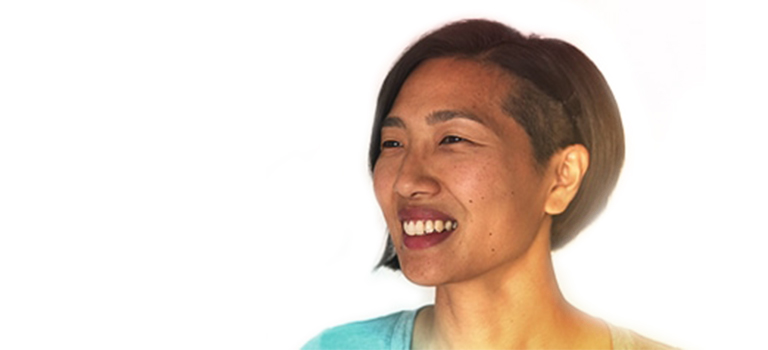
Sue Tan, professor in the USC Master of Integrated Design, Business and Technology program, is fascinated by thinking of solutions in one industry that can be applied to another. “Jumping between clients as diverse as end-of-life care to luxury hospitality helped me to have a vast mosaic of inspiration to draw from,” she said. Success in aligning business models and cultures, “all comes down to people, and being able to build the bridges between behaviors, values and unmet needs to solutions that lie at the overlap of human desirability, business viability and technical or organizational feasibility.”
We asked Tan about her design philosophy, her experience launching her own design consultancy and the value of integrative coursework for students.
You’ve worked as a senior strategist at IDEO, one of the most famous design firms in the world. What was one of the biggest lessons you learned from IDEO’s human-centered approach to design?
That it is possible to be brilliant and humble! IDEO is filled with talented, creative, generous interdisciplinary designers that really buck the stereotype of many ego-driven creative cultures. I think this type of culture and behavior is really a key to IDEO’s success in nurturing a collaborative and empathic culture internally and with clients.
More recently, you co-founded Magnum Opus (MO) Studio, a design consultancy, and serve as the chief creative officer. What was your team’s inspiration for MO Studio’s design philosophy?
On the back of my business card is the statement, “MO Studio — An interdisciplinary playground for creative problem-solving.” I think this expresses our founding and daily inspiration on a few levels.
We truly believe in the power of diversity — each of my partners comes from drastically different personal and professional backgrounds and represents the disciplines of design, business and user research, respectively. At the same time, we share similar values and cultural DNA when it comes to things like open communication, radical collaboration and honesty, generosity, and putting family before work. We have all experienced what it is like to work in large companies that can challenge the spirit in terms of an overwhelming bureaucracy, politics and a lack of empowerment and creative permission.
We wanted to take the best of what we’ve learned from our past careers but also create as close to an “organizational utopia” as we could, changing things that in the past left us personally and professionally stifled or disillusioned. Play is also integral to our work! Creativity is the result of allowing yourself and your team to explore, diverging before converging on an answer, and getting your hands dirty while you build and tinker your way to a solution.
Ultimately, we took on the risk and challenge of starting our own business so we could have fun and flourish on our own terms. Our website sums it up best: “We are a team of optimistic, fun-loving and passionately curious dreamers, thinkers and doers. If creativity, diversity, working hard, playing hard, and good eats and beats are your thing, we will get along swimmingly.”
What’s a recent project you’ve worked on that you’re excited about?
We recently completed a very intense, quick project to develop the vision of a digital product. It allowed us to unpack broad labels and trends around millennials, Gen Z, and the increasingly culturally and racially diverse landscape of American popular culture. I can’t reveal too much detail, and the product is just in the early stages of development. But I am excited about a future landscape of media and technology that is more inclusive of diverse narratives and goes beyond what’s been considered mainstream for the past 20 to 30 years.
You teach a course called Opportunity and Uncertainty. What will students take away from the course?
Opportunity and Uncertainty is essentially how to not be paralyzed by the fast-moving pace of change we live in, specifically from a business standpoint. Uncertainty is a fact of life; although many tools and methods have been used to fool us into thinking that markets and consumers will behave according to projections and data, those often only give a false sense of confidence and certainty.
Business strategy and entrepreneurs in the real world have definitely responded to the challenges of staying relevant in the digital and global age. But much of business education has failed to acknowledge the value of nonlinear, more creative forms of problem-solving. This course equips students with practical tools, processes and frameworks for dealing with the unknown. More important, the course tries to instill an open, nimble and uncertainty-embracing mindset. My hope is that after taking the course students will feel more empowered to ride the waves of change. Instead of feeling helpless, they will have the skills to navigate, course correct, strategize and intuit their way through the haze.
What are some key strategies from the course that students may find surprising or challenging?
In one of the units about scenario planning, I chose a video about Syd Mead, an American industrial designer and futurist famous for creating the designs and concepts for science fiction movies like Blade Runner and Tron. In the world of strategy and innovation, successful business moguls are often held up as heroes because they are able to generate wealth for investors. While we all need to think more like Elon Musk, we also need to think more like Syd Mead in terms of how we are able to synthesize culture with technology, trends and behaviors to paint tangible visions of what could happen — or what we definitely don’t want to happen.
I also talk about the concept of a “triple bottom line,” where positive impact on people and the environment are as important as profits when evaluating the strength of a business. If we are to create a better, happier and healthier global society the business leaders of the future need to be purpose-driven, not just profit-driven.
USC’s online Master of Science in Integrated Design, Business and Technology program focuses on the intersection of design, technology and business. What value do you think this type of program has for students as they advance in their careers?
The overall landscape of higher education is changing, but it is not changing fast enough. I feel there is not a strong enough sense of urgency to make education more relevant to the times. The program is a bold and brave experiment that is taking risks that most institutions are still only contemplating. The founding team has built a learning experience centered around diversity, curiosity, creativity and silo breaking. I know so many people in my personal and professional life who, after five to 10 years in the workforce, feel completely lost and lacking a professional “home,” a place that feeds the different intellectual and philosophical dimensions of who they are.
Traditional education and many organizations tend to force people to “pick a lane” and stick to it. I think the new generation is rejecting that limited notion of talent and potential. This program helps people realize that the disparate interests, passions and experiences that they’ve collected throughout their lives are a strength, not a weakness. You can be a musician and an accountant; you can be a creative and revolutionary math teacher; you can be a designer and an entrepreneur. This program helps people find constructive and meaningful ways to strengthen and combine all those aspects of themselves to create positive change.
Citation: The USC Iovine and Young Academy’s online Master of Science in Integrated Design, Business and Technology